7 Powerful Steps to Start Selling Successfully in 2026
1. Introduction to Selling on FirstCry
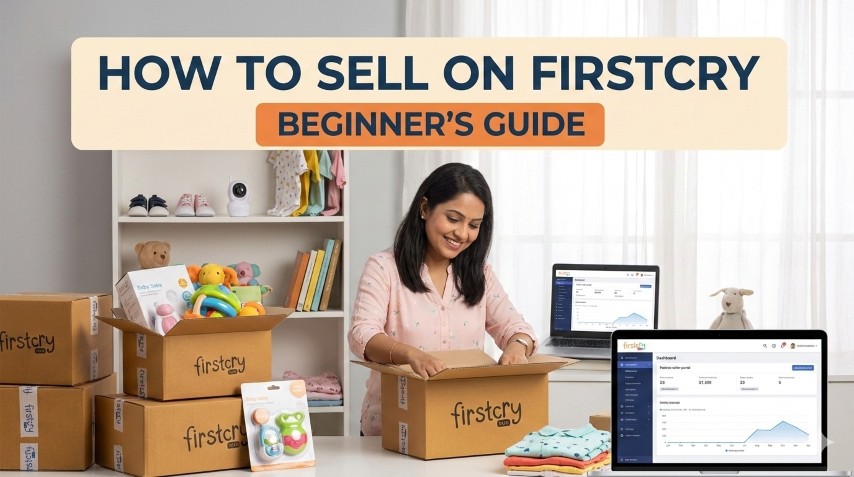
Are you a manufacturer, wholesaler, retailer, or business owner looking to sell baby products online? If so, learning how to sell on FirstCry can help you explore a business opportunity in India's baby, kids, and maternity products market.
FirstCry is a well-known retail platform that offers products for babies, children, and parents. Its product categories include baby clothing, toys, feeding accessories, maternity products, footwear, nursery essentials, and many other items.
For businesses that manufacture or distribute these products, connecting with FirstCry may create an opportunity to reach customers through an established retail channel.
However, there's an important point to understand before you begin.
FirstCry doesn't necessarily operate like a traditional open marketplace where every seller can create an account, upload products, and start selling immediately. Business opportunities may involve a supplier relationship, a business tie-up, or other arrangements depending on the product category and the company's current requirements.
FirstCry provides a business/supplier tie-up inquiry option on its official website. The company reviews business inquiries, and the availability of a partnership depends on its requirements.
This guide explains how to approach FirstCry, prepare your business, organize your product catalogue, and understand the important factors involved in selling baby and kids' products.
Whether you're launching a new brand or expanding an existing business, the following steps will help you prepare for the process.
2. Understanding the FirstCry Business Model
Before learning how to sell on FirstCry, it's important to understand the different ways businesses and individuals may work with the platform.
Not every business relationship follows the same process. Your options depend on your products, business model, and FirstCry's current onboarding arrangements.
2.1 Wholesale and Supplier Partnerships
A supplier partnership involves offering products to a retailer under agreed commercial terms.
For example, suppose you manufacture baby blankets under your own brand. You can prepare a catalogue containing product photographs, material details, available sizes, wholesale prices, and packaging information.
You can then approach FirstCry through its official business/supplier tie-up channel to express your interest in supplying those products.
If the company is interested, its team may discuss product suitability, commercial terms, supply capacity, and the next steps.
The exact relationship, payment terms, and operational responsibilities must be confirmed directly with FirstCry.
2.2 Marketplace Selling
A marketplace model allows third-party sellers to list and sell products through a platform under its seller policies.
In a typical marketplace, sellers may manage product listings, prices, stock, and orders through a seller dashboard.
However, businesses shouldn't assume that FirstCry offers the same self-service seller registration and listing process as every other marketplace.
FirstCry's current business/supplier tie-up process should be used to confirm whether a suitable selling arrangement is available for your product category.
2.3 Affiliate Marketing
Affiliate marketing is another way to earn rewards by promoting products without manufacturing or holding inventory.
FirstCry has an official affiliate program through which approved participants can share product links and earn rewards according to the program's terms.
The program is different from becoming a product supplier. You promote products rather than selling your own inventory through a supplier relationship.
3. Why Sell Baby and Kids' Products on FirstCry?
Baby and kids' products serve a specific customer group with practical and recurring needs.
Parents and caregivers regularly purchase clothing, feeding essentials, toys, footwear, and products that support a child's growth and everyday care.
For a business that already serves this market, a retail partnership can be one possible way to expand its distribution network.
Here are some reasons businesses may explore this opportunity.
3.1 Reach a Relevant Customer Base
FirstCry focuses on products for babies, children, and parents.
Businesses with products that fit these categories can explore whether their offerings match the retailer's sourcing requirements.
3.2 Build Brand Visibility
Working with an established retailer may help a brand introduce its products to customers who are already shopping for baby and children's products.
However, visibility depends on the commercial arrangement, product placement, availability, and other factors.
3.3 Expand Your Distribution Network
Manufacturers and wholesalers often look for multiple sales channels instead of depending on one source of revenue.
A supplier relationship with a retailer may become one part of a broader distribution strategy.
3.4 Organize Your Business for Growth
Preparing to approach a large retailer encourages businesses to improve their product data, pricing, packaging, inventory planning, and quality-control processes.
These improvements can also help when approaching other retail partners.
Important: A FirstCry partnership isn't guaranteed. Businesses should evaluate the opportunity based on actual commercial terms and their ability to meet the retailer's requirements.
4. 7 Powerful Steps to Sell on FirstCry
The following seven steps explain how to prepare your business and approach FirstCry through its official business/supplier tie-up channel.
Step 1: Research the Market
Start by understanding the products you want to supply.
Study the baby and kids' product categories relevant to your business. Review product types, materials, sizes, packaging, and customer needs.
For example, a business selling baby clothing should research:
Common clothing types, such as rompers, bodysuits, and sleepwear.
Available sizes and age groups.
Fabric composition and comfort.
Seasonal product requirements.
Packaging and labeling standards.
You should also compare your products with similar products in the market.
Ask yourself:
What makes my product different?
Can I offer consistent quality?
Can I supply the required quantities?
Is my pricing suitable for a retail partnership?
Do I have the documents and product information ready?
This research will help you prepare a clear business proposal.
Step 2: Prepare Your Business Documents
Before contacting FirstCry, organize your business information.
A well-prepared supplier proposal may include:
Business name and contact details.
PAN and GST registration details, where applicable.
Business registration documents, where applicable.
Product catalogue.
Wholesale price list.
Product specifications.
Manufacturing or sourcing details.
Brand ownership or authorization documents, where applicable.
Relevant product safety and compliance documents.
These are general preparation recommendations, not a confirmed FirstCry document checklist. FirstCry's team should confirm the exact documents required for your business and product category.
Keep your documents clear, current, and consistent.
Step 3: Contact FirstCry Through Its Business/Supplier Tie-Up
Once your business information is ready, contact FirstCry through its official website.
Follow these general steps:
Visit the official FirstCry website.
Look for the Sell With Us or business/supplier tie-up option.
Open the relevant inquiry form.
Enter your business details and contact information.
Explain the products you want to supply.
Submit your inquiry and wait for a response.
The exact menu labels and steps may change. FirstCry's official contact page provides a business/supplier tie-up option for inquiries.
Step 4: Prepare Your Product Catalogue
A product catalogue is one of the most useful tools for presenting your business professionally.
It should help the buyer understand what you sell, how your products differ from others, and whether your business can supply them consistently.
Include the following information for each product:
Catalogue Field
Details
Product name
Clear and specific product name
SKU
Unique product identification code
Category
Baby clothing, toys, feeding, etc.
Brand
Brand name
Product images
Clear images from relevant angles
Material
Fabric, plastic, wood, or other materials
Size
Available sizes or dimensions
Color
Available color options
Wholesale price
Proposed supply price
MOQ
Minimum order quantity, if applicable
Packaging
Packaging type and dimensions
Compliance
Relevant certifications or safety information
Use clear product images and accurate descriptions.
Avoid exaggerated claims, misleading product photographs, or missing specifications.
Step 5: Discuss Pricing and Commercial Terms
Pricing plays an important role in any supplier relationship.
Before submitting your proposal, calculate the total cost of producing and supplying each product.
Include:
Manufacturing or purchase cost.
Packaging expenses.
Transportation and logistics.
Applicable taxes.
Quality-control costs.
Marketing or promotional expenses, where applicable.
Expected business profit.
Then prepare a proposed wholesale price list.
FirstCry's actual commercial terms, including any applicable fees, margins, payment terms, or deductions, should be confirmed directly with the company. Don't assume a standard marketplace commission or a fixed payment schedule.
Step 6: Complete the Onboarding Process
If FirstCry expresses interest in your products, the next stage may involve discussions about business suitability, documents, product specifications, and commercial terms.
Depending on the arrangement, the process may include:
Verification of business details.
Review of product information.
Submission of requested documents.
Discussion of pricing and supply conditions.
Quality or compliance checks, where applicable.
Finalization of the business relationship.
The exact onboarding process depends on the agreement and FirstCry's requirements.
Wait for confirmation before assuming your products are approved for sale.
Step 7: Manage Inventory and Orders
Once a supplier relationship is established, focus on reliable operations.
Maintain accurate inventory records and ensure that you can fulfill the agreed supply quantities.
Important practices include:
Track available stock by SKU.
Monitor production and replenishment timelines.
Inspect products before dispatch.
Use suitable packaging.
Maintain purchase and sales records.
Track delivery and payment documentation.
Address quality issues promptly.
A reliable supply process helps reduce avoidable delays and supports a stronger business relationship.
5. Documents Required to Sell on FirstCry
One of the most common questions business owners ask is: What documents are required to sell on FirstCry?
The answer depends on your business model, product category, and the terms of the proposed partnership.
FirstCry's publicly accessible contact information provides a business/supplier inquiry route, but a universal document checklist for all prospective suppliers isn't confirmed in the sources reviewed.
FirstCry
+1
The following table is a general preparation checklist.
Document
Purpose
PAN card
Business or proprietor identification
GST registration certificate
Tax registration, where applicable
Business registration certificate
Evidence of business structure, where applicable
Bank account details
Business payment arrangements
Product catalogue
Product information and specifications
Brand authorization
Proof of authorization, if applicable
Trademark details
Brand ownership information, if relevant
Product compliance documents
Applicable safety or regulatory requirements
Price list
Proposed wholesale or supply pricing
Business address proof
Business verification, if requested
5.1 Is GST Registration Required?
GST requirements depend on the nature of your business, the goods supplied, the transaction structure, and applicable tax rules.
Before entering a supplier arrangement, consult a qualified tax professional to confirm your registration and invoicing obligations.
You can also review the official GST portal for registration and compliance information.
External resource: Official GST Portal
5.2 Do You Need a Trademark?
A trademark can help protect your brand identity, but whether trademark registration is required for a particular supplier relationship must be confirmed with FirstCry.
If you own a brand, keep your brand details and ownership documents organized.
6. How to Choose Products for FirstCry
Choosing the right products is an important part of preparing a supplier proposal.
Rather than offering a large number of unrelated items, focus on products that fit your manufacturing or sourcing capabilities and the needs of your target customers.
6.1 Baby Clothing
Baby clothing includes products such as:
Rompers and bodysuits.
Baby T-shirts and tops.
Sleepsuits.
Baby blankets.
Seasonal clothing.
Baby socks and accessories.
Focus on material quality, sizing accuracy, stitching, comfort, and labeling.
6.2 Toys and Learning Products
Toys can include building blocks, activity toys, puzzles, and other age-appropriate products.
Pay attention to product safety, age recommendations, material quality, and applicable standards.
6.3 Feeding and Nursery Products
This category may include feeding accessories, storage products, bedding, and nursery essentials.
Product safety, hygiene, durability, and accurate material information are particularly important.
6.4 Maternity Products
Maternity products may include clothing, nursing accessories, and other items designed for expectant and new mothers.
Clear sizing, practical design, material information, and product quality can help distinguish your products.
6.5 How to Evaluate Product Opportunities
Use the following questions before investing in inventory:
Is there a clear customer need for the product?
Can you maintain consistent quality?
Can you supply the product at a sustainable cost?
Does the product meet applicable legal and safety requirements?
Can you maintain sufficient stock?
Is the product suitable for your target retail channel?
Start with a focused product range and expand only when your supply process can support it.
7. Product Catalogue and Listing Optimization
A well-organized product catalogue helps buyers understand your products and compare options.
Even if you're approaching FirstCry as a supplier rather than using a self-service seller dashboard, professional product data is essential.
7.1 Write Clear Product Titles
Product titles should explain what the product is without unnecessary promotional language.
Example:
Instead of:
"Super Cute Best Quality Baby Dress New Arrival"
Use:
"Baby Cotton Printed Romper – Short Sleeve, 0–12 Months"
A clear title identifies the product type, material, design, and size range.
7.2 Write Accurate Product Descriptions
A good product description answers the buyer's most important questions.
Include:
Product type and intended use.
Material and composition.
Size and dimensions.
Available colors.
Care instructions.
Package contents.
Applicable safety information.
Avoid claims that you can't verify.
7.3 Use High-Quality Product Images
Product photographs should clearly show the product.
Consider including:
Front view.
Back view.
Close-up of the material or important features.
Packaging image.
Size or dimension reference, where useful.
Use consistent lighting and backgrounds. Make sure the images accurately represent the product being supplied.
7.4 Maintain Consistent Product Data
Use a structured spreadsheet to organize product information.
SKU
Product
Size
Color
Material
BB001
Baby Romper
0–3 Months
White
Cotton
BB002
Baby Romper
3–6 Months
Blue
Cotton
BB003
Baby Blanket
Standard
Pink
Cotton Blend
This structure can make product management and catalogue updates easier.
8. Pricing, Margins, and Profit Planning
A sustainable pricing strategy starts with understanding your total product cost.
Before submitting a supply proposal, calculate the cost of each item and determine the minimum price at which your business can operate profitably.
8.1 Calculate Your Product Cost
Consider this example for a hypothetical baby blanket.
Cost Component
Amount
Manufacturing cost
₹180
Packaging
₹15
Quality control
₹10
Transportation allocation
₹20
Total estimated cost
₹225
If the proposed supply price is ₹300 per unit, the difference before other expenses and taxes is ₹75.
This is not necessarily your final net profit.
Other expenses, taxes, discounts, returns, financing costs, and contractual deductions may affect the final amount.
8.2 Understand Gross Margin
Gross margin is the percentage of revenue remaining after deducting the direct cost of goods sold.
The formula is:
Gross Margin (%) = (Selling Price − Cost of Goods Sold) ÷ Selling Price × 100
For example, if the selling price is ₹300 and the direct cost is ₹225:
Gross margin = (₹300 − ₹225) ÷ ₹300 × 100 = 25%
This example is for planning purposes only.
8.3 Confirm Commercial Terms
Before accepting an offer, clarify:
Purchase or supply price.
Payment schedule.
Applicable taxes.
Transportation responsibilities.
Packaging requirements.
Return or rejection conditions.
Any agreed promotional expenses.
Order quantities and delivery timelines.
Never finalize your business plan based on an assumed commission rate or unconfirmed payment terms.
9. Inventory, Packaging, and Quality Control
A reliable inventory system helps your business manage stock, avoid shortages, and fulfill supply commitments.
For baby and kids' products, quality control is especially important because customers rely on these products for everyday use.
9.1 Maintain Accurate Inventory
Track each product using a unique SKU.
Record:
Opening stock.
Production quantity.
Stock received.
Stock supplied.
Damaged or rejected units.
Closing stock.
Update your records regularly so you can identify shortages before they affect supply.
9.2 Follow Packaging Requirements
Packaging should protect products during storage and transportation.
For example:
Use suitable protective packaging.
Keep product labels readable.
Prevent moisture or dust damage where relevant.
Include required product information.
Follow any packaging instructions provided by the buyer.
The specific packaging requirements should be confirmed before dispatch.
9.3 Conduct Quality Checks
Before supplying products, inspect:
Product dimensions and sizing.
Stitching, finishing, and material quality.
Color consistency.
Packaging condition.
Product labels and barcodes, where applicable.
Applicable safety and compliance information.
Maintain records of quality inspections and address recurring defects promptly.
10. Common Mistakes to Avoid When Selling on FirstCry
Businesses can face avoidable problems when approaching a retail partnership without proper preparation.
Here are some common mistakes to avoid.
10.1 Assuming Registration Is Automatically Available
Don't assume you can create a seller account and begin listing products immediately.
First confirm whether FirstCry accepts suppliers or sellers for your product category and what business arrangement is available.
10.2 Submitting an Incomplete Catalogue
Missing product specifications, unclear photographs, and inconsistent pricing can make your proposal harder to evaluate.
Prepare a structured catalogue before contacting the company.
10.3 Ignoring Product Compliance
Baby and children's products may be subject to specific safety, labeling, and regulatory requirements.
Identify the rules that apply to your products before offering them for sale.
10.4 Underestimating Costs
A low supply price may look attractive, but it can reduce profitability if transportation, packaging, taxes, or other expenses aren't included.
Calculate your full cost before negotiating.
10.5 Making Unsupported Product Claims
Avoid claims such as "100% safe," "completely chemical-free," or "doctor-approved" unless you have suitable evidence and the claim is legally permitted.
Accurate product information supports customer trust and responsible business practices.
10.6 Trusting Unverified Registration Agents
Use official FirstCry channels for business inquiries.
FirstCry warns users against fraudulent communications and requests for sensitive information or suspicious payments.
FirstCry
Never share passwords, OTPs, PINs, or banking credentials with an unverified person.
11. How StyleMyCatalog Can Help Your Business
If you're planning to sell baby and kids' products online, preparing a professional catalogue is an important step.
StyleMyCatalog provides e-commerce-related services that can help businesses organize product information and prepare digital product catalogues.
StyleMyCatalog
StyleMyCatalog can help businesses prepare product information and catalogue assets for their online selling and distribution needs.
Services to explore:
Product catalogue creation.
Product title and description writing.
Product image preparation.
Product data organization.
E-commerce catalogue management.
Marketplace-related catalogue support.
Visit StyleMyCatalog
11.1 Prepare Your Product Catalogue Professionally
A structured catalogue can help you present your products clearly when approaching retailers or other sales channels.
Make sure your product information is accurate and that your images match the actual products.
11.2 Organize Product Data
If you have hundreds of products, organizing SKUs, sizes, colors, and product descriptions in a consistent format can save time.
A well-maintained product database can also make future catalogue updates easier.
11.3 Plan Your E-commerce Expansion
A business may explore multiple distribution channels, including its own website, online marketplaces, wholesale buyers, and retail partnerships.
StyleMyCatalog can support catalogue-related preparation, but FirstCry's supplier approval and commercial arrangements must be handled directly with FirstCry.
12. Frequently Asked Questions (FAQs)
FAQ 1: How to sell on FirstCry in India?
To explore selling on FirstCry, prepare your business details and product catalogue, then contact the company through its official business/supplier tie-up channel. The available selling arrangement and approval process depend on your product category and FirstCry's requirements.
FAQ 2: Does FirstCry have a seller registration portal?
FirstCry provides a business/supplier tie-up inquiry option. Businesses shouldn't assume that a general self-service seller registration portal is available for every category. Contact FirstCry to confirm the current process.
FirstCry
+1
FAQ 3: What documents are required to sell on FirstCry?
Potential suppliers should prepare business identification, applicable tax registration details, product catalogues, pricing information, and relevant product compliance documents. The exact document checklist must be confirmed directly with FirstCry.
FAQ 4: Can I sell baby clothes on FirstCry?
Baby clothing is a relevant product category for FirstCry's retail business. However, whether your brand or products can be accepted depends on the company's current sourcing requirements and commercial arrangements.
FAQ 5: Is GST registration mandatory to sell on FirstCry?
GST obligations depend on the business structure, product category, and nature of the transaction. Confirm the applicable requirements with a qualified tax professional and FirstCry before entering a supplier arrangement.
FAQ 6: Does FirstCry charge a seller commission?
A standard seller commission applicable to all suppliers hasn't been confirmed in the sources reviewed. Commercial terms depend on the specific arrangement. Ask FirstCry directly about any applicable fees, margins, deductions, or other charges.
FAQ 7: Can a small business become a FirstCry supplier?
A small business can explore a supplier inquiry if its products are relevant to FirstCry's requirements. Acceptance isn't guaranteed and may depend on product suitability, quality, pricing, supply capacity, and other business factors.
FAQ 8: How can I contact FirstCry for a supplier partnership?
Visit the official FirstCry website and look for the business/supplier tie-up option. You can also use the official contact page to submit a business inquiry.
Official link: FirstCry Contact Us
FAQ 9: Can I sell products on FirstCry without manufacturing them?
If you source products from manufacturers or wholesalers, you can explore a supplier inquiry using your business model and product details. You should have the necessary authorization and documentation and confirm whether FirstCry accepts your proposed arrangement.
FAQ 10: Can I earn money by promoting FirstCry products?
FirstCry has an affiliate program that allows approved participants to share product links and earn rewards under its program rules. Affiliate marketing is different from supplying your own products.
FirstCry
13. Conclusion: Start Your FirstCry Selling Journey with Proper Preparation
Learning how to sell on FirstCry begins with understanding the company's business model and preparing your business for a potential supplier relationship.
The process involves researching your product category, organizing business documents, preparing a professional catalogue, contacting FirstCry through its official business/supplier tie-up channel, and confirming the commercial terms.
A successful retail partnership requires more than attractive product images. Product quality, reliable supply, accurate product information, sustainable pricing, and compliance with applicable regulations all matter.
If you're a manufacturer, wholesaler, or brand owner in the baby and kids' product industry, start by preparing a clear catalogue and a practical business proposal.
Ready to prepare your product catalogue? Visit StyleMyCatalog to explore catalogue-related services and organize your product data for your e-commerce business.
Prepare Your Product Catalogue with StyleMyCatalog
Organize your product information, improve catalogue presentation, and prepare your business for online selling opportunities.
Get Started with StyleMyCatalog
1. Introduction to Selling on FirstCry
Are you a manufacturer, wholesaler, retailer, or business owner looking to sell baby products online? If so, learning how to sell on FirstCry can help you explore a business opportunity in India's baby, kids, and maternity products market.
FirstCry is a well-known retail platform that offers products for babies, children, and parents. Its product categories include baby clothing, toys, feeding accessories, maternity products, footwear, nursery essentials, and many other items.
For businesses that manufacture or distribute these products, connecting with FirstCry may create an opportunity to reach customers through an established retail channel.
However, there's an important point to understand before you begin.
FirstCry doesn't necessarily operate like a traditional open marketplace where every seller can create an account, upload products, and start selling immediately. Business opportunities may involve a supplier relationship, a business tie-up, or other arrangements depending on the product category and the company's current requirements.
FirstCry provides a business/supplier tie-up inquiry option on its official website. The company reviews business inquiries, and the availability of a partnership depends on its requirements.
This guide explains how to approach FirstCry, prepare your business, organize your product catalogue, and understand the important factors involved in selling baby and kids' products.
Whether you're launching a new brand or expanding an existing business, the following steps will help you prepare for the process.
2. Understanding the FirstCry Business Model
Before learning how to sell on FirstCry, it's important to understand the different ways businesses and individuals may work with the platform.
Not every business relationship follows the same process. Your options depend on your products, business model, and FirstCry's current onboarding arrangements.
2.1 Wholesale and Supplier Partnerships
A supplier partnership involves offering products to a retailer under agreed commercial terms.
For example, suppose you manufacture baby blankets under your own brand. You can prepare a catalogue containing product photographs, material details, available sizes, wholesale prices, and packaging information.
You can then approach FirstCry through its official business/supplier tie-up channel to express your interest in supplying those products.
If the company is interested, its team may discuss product suitability, commercial terms, supply capacity, and the next steps.
The exact relationship, payment terms, and operational responsibilities must be confirmed directly with FirstCry.
2.2 Marketplace Selling
A marketplace model allows third-party sellers to list and sell products through a platform under its seller policies.
In a typical marketplace, sellers may manage product listings, prices, stock, and orders through a seller dashboard.
However, businesses shouldn't assume that FirstCry offers the same self-service seller registration and listing process as every other marketplace.
FirstCry's current business/supplier tie-up process should be used to confirm whether a suitable selling arrangement is available for your product category.
2.3 Affiliate Marketing
Affiliate marketing is another way to earn rewards by promoting products without manufacturing or holding inventory.
FirstCry has an official affiliate program through which approved participants can share product links and earn rewards according to the program's terms.
The program is different from becoming a product supplier. You promote products rather than selling your own inventory through a supplier relationship.
3. Why Sell Baby and Kids' Products on FirstCry?
Baby and kids' products serve a specific customer group with practical and recurring needs.
Parents and caregivers regularly purchase clothing, feeding essentials, toys, footwear, and products that support a child's growth and everyday care.
For a business that already serves this market, a retail partnership can be one possible way to expand its distribution network.
Here are some reasons businesses may explore this opportunity.
3.1 Reach a Relevant Customer Base
FirstCry focuses on products for babies, children, and parents.
Businesses with products that fit these categories can explore whether their offerings match the retailer's sourcing requirements.
3.2 Build Brand Visibility
Working with an established retailer may help a brand introduce its products to customers who are already shopping for baby and children's products.
However, visibility depends on the commercial arrangement, product placement, availability, and other factors.
3.3 Expand Your Distribution Network
Manufacturers and wholesalers often look for multiple sales channels instead of depending on one source of revenue.
A supplier relationship with a retailer may become one part of a broader distribution strategy.
3.4 Organize Your Business for Growth
Preparing to approach a large retailer encourages businesses to improve their product data, pricing, packaging, inventory planning, and quality-control processes.
These improvements can also help when approaching other retail partners.
Important: A FirstCry partnership isn't guaranteed. Businesses should evaluate the opportunity based on actual commercial terms and their ability to meet the retailer's requirements.
4. 7 Powerful Steps to Sell on FirstCry
The following seven steps explain how to prepare your business and approach FirstCry through its official business/supplier tie-up channel.
Step 1: Research the Market
Start by understanding the products you want to supply.
Study the baby and kids' product categories relevant to your business. Review product types, materials, sizes, packaging, and customer needs.
For example, a business selling baby clothing should research:
Common clothing types, such as rompers, bodysuits, and sleepwear.
Available sizes and age groups.
Fabric composition and comfort.
Seasonal product requirements.
Packaging and labeling standards.
You should also compare your products with similar products in the market.
Ask yourself:
What makes my product different?
Can I offer consistent quality?
Can I supply the required quantities?
Is my pricing suitable for a retail partnership?
Do I have the documents and product information ready?
This research will help you prepare a clear business proposal.
Step 2: Prepare Your Business Documents
Before contacting FirstCry, organize your business information.
A well-prepared supplier proposal may include:
Business name and contact details.
PAN and GST registration details, where applicable.
Business registration documents, where applicable.
Product catalogue.
Wholesale price list.
Product specifications.
Manufacturing or sourcing details.
Brand ownership or authorization documents, where applicable.
Relevant product safety and compliance documents.
These are general preparation recommendations, not a confirmed FirstCry document checklist. FirstCry's team should confirm the exact documents required for your business and product category.
Keep your documents clear, current, and consistent.
Step 3: Contact FirstCry Through Its Business/Supplier Tie-Up
Once your business information is ready, contact FirstCry through its official website.
Follow these general steps:
Visit the official FirstCry website.
Look for the Sell With Us or business/supplier tie-up option.
Open the relevant inquiry form.
Enter your business details and contact information.
Explain the products you want to supply.
Submit your inquiry and wait for a response.
The exact menu labels and steps may change. FirstCry's official contact page provides a business/supplier tie-up option for inquiries.
Step 4: Prepare Your Product Catalogue
A product catalogue is one of the most useful tools for presenting your business professionally.
It should help the buyer understand what you sell, how your products differ from others, and whether your business can supply them consistently.
Include the following information for each product:
Catalogue Field
Details
Product name
Clear and specific product name
SKU
Unique product identification code
Category
Baby clothing, toys, feeding, etc.
Brand
Brand name
Product images
Clear images from relevant angles
Material
Fabric, plastic, wood, or other materials
Size
Available sizes or dimensions
Color
Available color options
Wholesale price
Proposed supply price
MOQ
Minimum order quantity, if applicable
Packaging
Packaging type and dimensions
Compliance
Relevant certifications or safety information
Use clear product images and accurate descriptions.
Avoid exaggerated claims, misleading product photographs, or missing specifications.
Step 5: Discuss Pricing and Commercial Terms
Pricing plays an important role in any supplier relationship.
Before submitting your proposal, calculate the total cost of producing and supplying each product.
Include:
Manufacturing or purchase cost.
Packaging expenses.
Transportation and logistics.
Applicable taxes.
Quality-control costs.
Marketing or promotional expenses, where applicable.
Expected business profit.
Then prepare a proposed wholesale price list.
FirstCry's actual commercial terms, including any applicable fees, margins, payment terms, or deductions, should be confirmed directly with the company. Don't assume a standard marketplace commission or a fixed payment schedule.
Step 6: Complete the Onboarding Process
If FirstCry expresses interest in your products, the next stage may involve discussions about business suitability, documents, product specifications, and commercial terms.
Depending on the arrangement, the process may include:
Verification of business details.
Review of product information.
Submission of requested documents.
Discussion of pricing and supply conditions.
Quality or compliance checks, where applicable.
Finalization of the business relationship.
The exact onboarding process depends on the agreement and FirstCry's requirements.
Wait for confirmation before assuming your products are approved for sale.
Step 7: Manage Inventory and Orders
Once a supplier relationship is established, focus on reliable operations.
Maintain accurate inventory records and ensure that you can fulfill the agreed supply quantities.
Important practices include:
Track available stock by SKU.
Monitor production and replenishment timelines.
Inspect products before dispatch.
Use suitable packaging.
Maintain purchase and sales records.
Track delivery and payment documentation.
Address quality issues promptly.
A reliable supply process helps reduce avoidable delays and supports a stronger business relationship.
5. Documents Required to Sell on FirstCry
One of the most common questions business owners ask is: What documents are required to sell on FirstCry?
The answer depends on your business model, product category, and the terms of the proposed partnership.
FirstCry's publicly accessible contact information provides a business/supplier inquiry route, but a universal document checklist for all prospective suppliers isn't confirmed in the sources reviewed.
FirstCry
+1
The following table is a general preparation checklist.
Document
Purpose
PAN card
Business or proprietor identification
GST registration certificate
Tax registration, where applicable
Business registration certificate
Evidence of business structure, where applicable
Bank account details
Business payment arrangements
Product catalogue
Product information and specifications
Brand authorization
Proof of authorization, if applicable
Trademark details
Brand ownership information, if relevant
Product compliance documents
Applicable safety or regulatory requirements
Price list
Proposed wholesale or supply pricing
Business address proof
Business verification, if requested
5.1 Is GST Registration Required?
GST requirements depend on the nature of your business, the goods supplied, the transaction structure, and applicable tax rules.
Before entering a supplier arrangement, consult a qualified tax professional to confirm your registration and invoicing obligations.
You can also review the official GST portal for registration and compliance information.
External resource: Official GST Portal
5.2 Do You Need a Trademark?
A trademark can help protect your brand identity, but whether trademark registration is required for a particular supplier relationship must be confirmed with FirstCry.
If you own a brand, keep your brand details and ownership documents organized.
6. How to Choose Products for FirstCry
Choosing the right products is an important part of preparing a supplier proposal.
Rather than offering a large number of unrelated items, focus on products that fit your manufacturing or sourcing capabilities and the needs of your target customers.
6.1 Baby Clothing
Baby clothing includes products such as:
Rompers and bodysuits.
Baby T-shirts and tops.
Sleepsuits.
Baby blankets.
Seasonal clothing.
Baby socks and accessories.
Focus on material quality, sizing accuracy, stitching, comfort, and labeling.
6.2 Toys and Learning Products
Toys can include building blocks, activity toys, puzzles, and other age-appropriate products.
Pay attention to product safety, age recommendations, material quality, and applicable standards.
6.3 Feeding and Nursery Products
This category may include feeding accessories, storage products, bedding, and nursery essentials.
Product safety, hygiene, durability, and accurate material information are particularly important.
6.4 Maternity Products
Maternity products may include clothing, nursing accessories, and other items designed for expectant and new mothers.
Clear sizing, practical design, material information, and product quality can help distinguish your products.
6.5 How to Evaluate Product Opportunities
Use the following questions before investing in inventory:
Is there a clear customer need for the product?
Can you maintain consistent quality?
Can you supply the product at a sustainable cost?
Does the product meet applicable legal and safety requirements?
Can you maintain sufficient stock?
Is the product suitable for your target retail channel?
Start with a focused product range and expand only when your supply process can support it.
7. Product Catalogue and Listing Optimization
A well-organized product catalogue helps buyers understand your products and compare options.
Even if you're approaching FirstCry as a supplier rather than using a self-service seller dashboard, professional product data is essential.
7.1 Write Clear Product Titles
Product titles should explain what the product is without unnecessary promotional language.
Example:
Instead of:
"Super Cute Best Quality Baby Dress New Arrival"
Use:
"Baby Cotton Printed Romper – Short Sleeve, 0–12 Months"
A clear title identifies the product type, material, design, and size range.
7.2 Write Accurate Product Descriptions
A good product description answers the buyer's most important questions.
Include:
Product type and intended use.
Material and composition.
Size and dimensions.
Available colors.
Care instructions.
Package contents.
Applicable safety information.
Avoid claims that you can't verify.
7.3 Use High-Quality Product Images
Product photographs should clearly show the product.
Consider including:
Front view.
Back view.
Close-up of the material or important features.
Packaging image.
Size or dimension reference, where useful.
Use consistent lighting and backgrounds. Make sure the images accurately represent the product being supplied.
7.4 Maintain Consistent Product Data
Use a structured spreadsheet to organize product information.
SKU
Product
Size
Color
Material
BB001
Baby Romper
0–3 Months
White
Cotton
BB002
Baby Romper
3–6 Months
Blue
Cotton
BB003
Baby Blanket
Standard
Pink
Cotton Blend
This structure can make product management and catalogue updates easier.
8. Pricing, Margins, and Profit Planning
A sustainable pricing strategy starts with understanding your total product cost.
Before submitting a supply proposal, calculate the cost of each item and determine the minimum price at which your business can operate profitably.
8.1 Calculate Your Product Cost
Consider this example for a hypothetical baby blanket.
Cost Component
Amount
Manufacturing cost
₹180
Packaging
₹15
Quality control
₹10
Transportation allocation
₹20
Total estimated cost
₹225
If the proposed supply price is ₹300 per unit, the difference before other expenses and taxes is ₹75.
This is not necessarily your final net profit.
Other expenses, taxes, discounts, returns, financing costs, and contractual deductions may affect the final amount.
8.2 Understand Gross Margin
Gross margin is the percentage of revenue remaining after deducting the direct cost of goods sold.
The formula is:
Gross Margin (%) = (Selling Price − Cost of Goods Sold) ÷ Selling Price × 100
For example, if the selling price is ₹300 and the direct cost is ₹225:
Gross margin = (₹300 − ₹225) ÷ ₹300 × 100 = 25%
This example is for planning purposes only.
8.3 Confirm Commercial Terms
Before accepting an offer, clarify:
Purchase or supply price.
Payment schedule.
Applicable taxes.
Transportation responsibilities.
Packaging requirements.
Return or rejection conditions.
Any agreed promotional expenses.
Order quantities and delivery timelines.
Never finalize your business plan based on an assumed commission rate or unconfirmed payment terms.
9. Inventory, Packaging, and Quality Control
A reliable inventory system helps your business manage stock, avoid shortages, and fulfill supply commitments.
For baby and kids' products, quality control is especially important because customers rely on these products for everyday use.
9.1 Maintain Accurate Inventory
Track each product using a unique SKU.
Record:
Opening stock.
Production quantity.
Stock received.
Stock supplied.
Damaged or rejected units.
Closing stock.
Update your records regularly so you can identify shortages before they affect supply.
9.2 Follow Packaging Requirements
Packaging should protect products during storage and transportation.
For example:
Use suitable protective packaging.
Keep product labels readable.
Prevent moisture or dust damage where relevant.
Include required product information.
Follow any packaging instructions provided by the buyer.
The specific packaging requirements should be confirmed before dispatch.
9.3 Conduct Quality Checks
Before supplying products, inspect:
Product dimensions and sizing.
Stitching, finishing, and material quality.
Color consistency.
Packaging condition.
Product labels and barcodes, where applicable.
Applicable safety and compliance information.
Maintain records of quality inspections and address recurring defects promptly.
10. Common Mistakes to Avoid When Selling on FirstCry
Businesses can face avoidable problems when approaching a retail partnership without proper preparation.
Here are some common mistakes to avoid.
10.1 Assuming Registration Is Automatically Available
Don't assume you can create a seller account and begin listing products immediately.
First confirm whether FirstCry accepts suppliers or sellers for your product category and what business arrangement is available.
10.2 Submitting an Incomplete Catalogue
Missing product specifications, unclear photographs, and inconsistent pricing can make your proposal harder to evaluate.
Prepare a structured catalogue before contacting the company.
10.3 Ignoring Product Compliance
Baby and children's products may be subject to specific safety, labeling, and regulatory requirements.
Identify the rules that apply to your products before offering them for sale.
10.4 Underestimating Costs
A low supply price may look attractive, but it can reduce profitability if transportation, packaging, taxes, or other expenses aren't included.
Calculate your full cost before negotiating.
10.5 Making Unsupported Product Claims
Avoid claims such as "100% safe," "completely chemical-free," or "doctor-approved" unless you have suitable evidence and the claim is legally permitted.
Accurate product information supports customer trust and responsible business practices.
10.6 Trusting Unverified Registration Agents
Use official FirstCry channels for business inquiries.
FirstCry warns users against fraudulent communications and requests for sensitive information or suspicious payments.
FirstCry
Never share passwords, OTPs, PINs, or banking credentials with an unverified person.
11. How StyleMyCatalog Can Help Your Business
If you're planning to sell baby and kids' products online, preparing a professional catalogue is an important step.
StyleMyCatalog provides e-commerce-related services that can help businesses organize product information and prepare digital product catalogues.
StyleMyCatalog
StyleMyCatalog can help businesses prepare product information and catalogue assets for their online selling and distribution needs.
Services to explore:
Product catalogue creation.
Product title and description writing.
Product image preparation.
Product data organization.
E-commerce catalogue management.
Marketplace-related catalogue support.
Visit StyleMyCatalog
11.1 Prepare Your Product Catalogue Professionally
A structured catalogue can help you present your products clearly when approaching retailers or other sales channels.
Make sure your product information is accurate and that your images match the actual products.
11.2 Organize Product Data
If you have hundreds of products, organizing SKUs, sizes, colors, and product descriptions in a consistent format can save time.
A well-maintained product database can also make future catalogue updates easier.
11.3 Plan Your E-commerce Expansion
A business may explore multiple distribution channels, including its own website, online marketplaces, wholesale buyers, and retail partnerships.
StyleMyCatalog can support catalogue-related preparation, but FirstCry's supplier approval and commercial arrangements must be handled directly with FirstCry.
12. Frequently Asked Questions (FAQs)
FAQ 1: How to sell on FirstCry in India?
To explore selling on FirstCry, prepare your business details and product catalogue, then contact the company through its official business/supplier tie-up channel. The available selling arrangement and approval process depend on your product category and FirstCry's requirements.
FAQ 2: Does FirstCry have a seller registration portal?
FirstCry provides a business/supplier tie-up inquiry option. Businesses shouldn't assume that a general self-service seller registration portal is available for every category. Contact FirstCry to confirm the current process.
FirstCry
+1
FAQ 3: What documents are required to sell on FirstCry?
Potential suppliers should prepare business identification, applicable tax registration details, product catalogues, pricing information, and relevant product compliance documents. The exact document checklist must be confirmed directly with FirstCry.
FAQ 4: Can I sell baby clothes on FirstCry?
Baby clothing is a relevant product category for FirstCry's retail business. However, whether your brand or products can be accepted depends on the company's current sourcing requirements and commercial arrangements.
FAQ 5: Is GST registration mandatory to sell on FirstCry?
GST obligations depend on the business structure, product category, and nature of the transaction. Confirm the applicable requirements with a qualified tax professional and FirstCry before entering a supplier arrangement.
FAQ 6: Does FirstCry charge a seller commission?
A standard seller commission applicable to all suppliers hasn't been confirmed in the sources reviewed. Commercial terms depend on the specific arrangement. Ask FirstCry directly about any applicable fees, margins, deductions, or other charges.
FAQ 7: Can a small business become a FirstCry supplier?
A small business can explore a supplier inquiry if its products are relevant to FirstCry's requirements. Acceptance isn't guaranteed and may depend on product suitability, quality, pricing, supply capacity, and other business factors.
FAQ 8: How can I contact FirstCry for a supplier partnership?
Visit the official FirstCry website and look for the business/supplier tie-up option. You can also use the official contact page to submit a business inquiry.
Official link: FirstCry Contact Us
FAQ 9: Can I sell products on FirstCry without manufacturing them?
If you source products from manufacturers or wholesalers, you can explore a supplier inquiry using your business model and product details. You should have the necessary authorization and documentation and confirm whether FirstCry accepts your proposed arrangement.
FAQ 10: Can I earn money by promoting FirstCry products?
FirstCry has an affiliate program that allows approved participants to share product links and earn rewards under its program rules. Affiliate marketing is different from supplying your own products.
FirstCry
13. Conclusion: Start Your FirstCry Selling Journey with Proper Preparation
Learning how to sell on FirstCry begins with understanding the company's business model and preparing your business for a potential supplier relationship.
The process involves researching your product category, organizing business documents, preparing a professional catalogue, contacting FirstCry through its official business/supplier tie-up channel, and confirming the commercial terms.
A successful retail partnership requires more than attractive product images. Product quality, reliable supply, accurate product information, sustainable pricing, and compliance with applicable regulations all matter.
If you're a manufacturer, wholesaler, or brand owner in the baby and kids' product industry, start by preparing a clear catalogue and a practical business proposal.
Ready to prepare your product catalogue? Visit StyleMyCatalog to explore catalogue-related services and organize your product data for your e-commerce business.
Prepare Your Product Catalogue with StyleMyCatalog
Organize your product information, improve catalogue presentation, and prepare your business for online selling opportunities.
Get Started with StyleMyCatalog